Northwestern|Kellogg
What this group
has built
AI in our classrooms: four ways consortium members use it in their teaching, and a live build.
Sébastien MartinAssociate Professor of Operations · Northwestern Kellogg
National Consortium on AI in Higher Education · Fall session · September 18, 2026
National Consortium on AI in Higher Education · Fall session · September 18, 2026
What this group has built
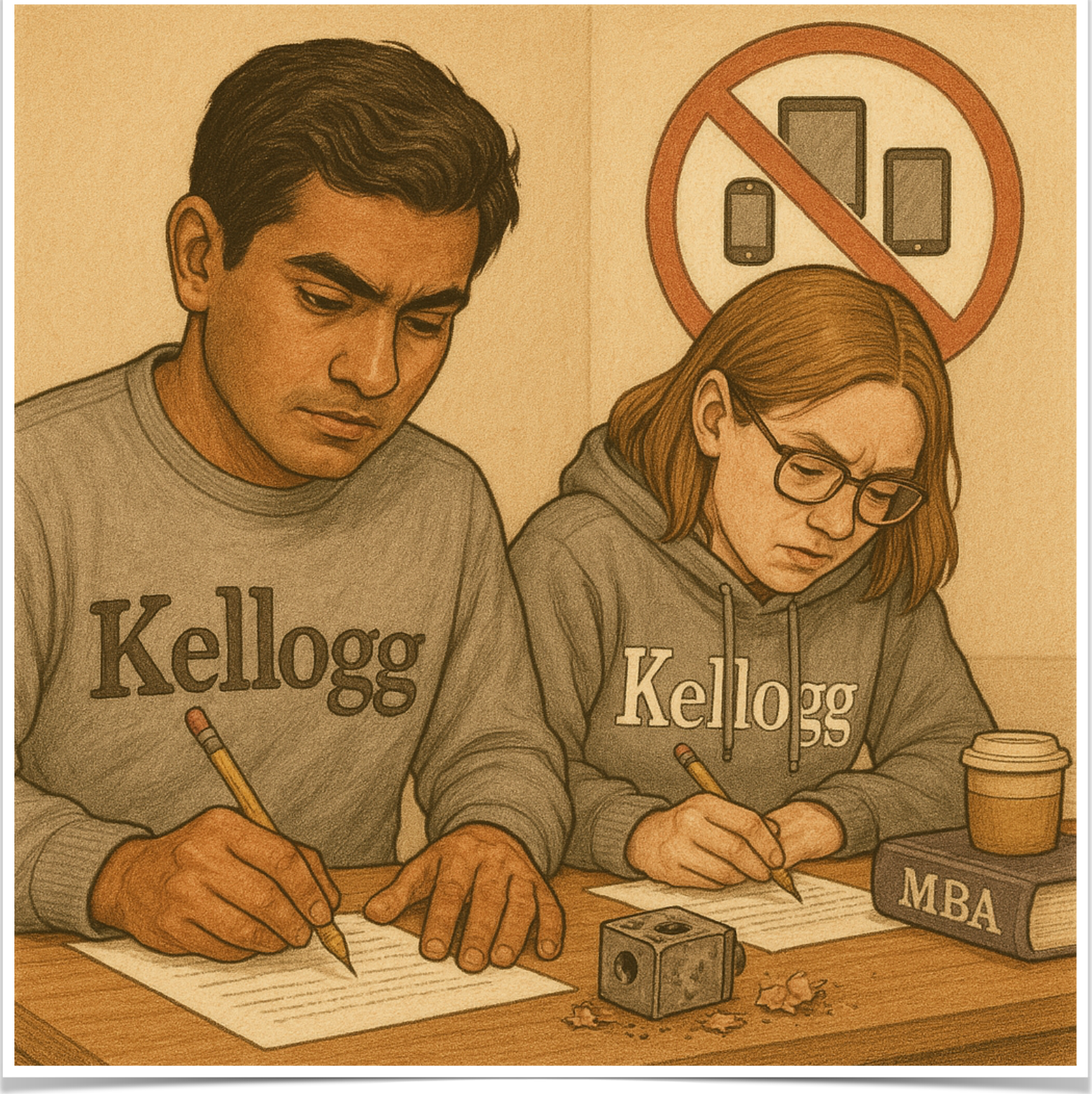
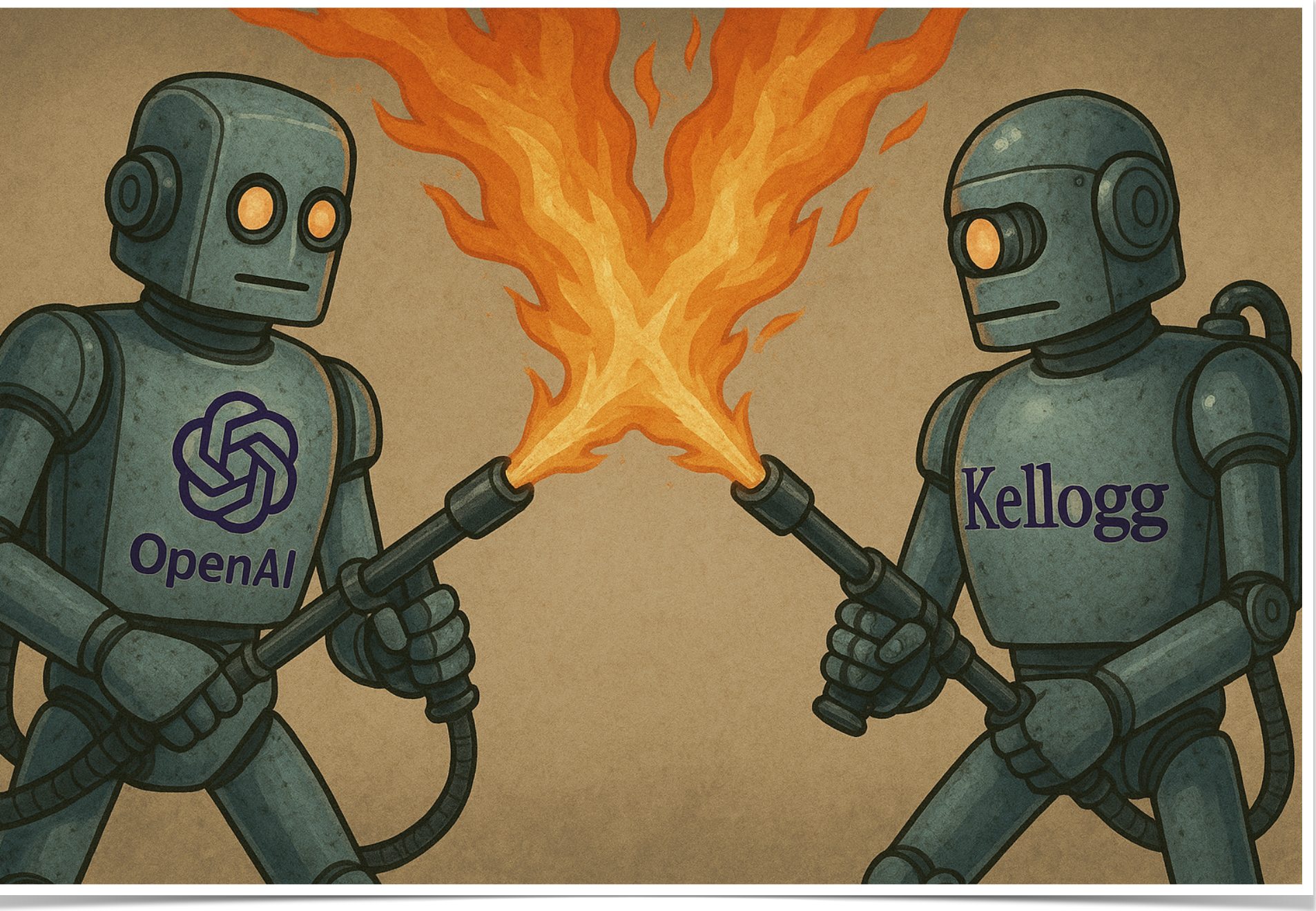
Navigating a technology disruption
What this group has built
Four ways AI is entering our classrooms
1
A tutor in every course
An assistant that knows your material, there at any hour.
2
Characters students talk to
Interviews, cases, and simulations played by AI personas.
3
Students supervising AI
Students direct the AI, and must check its work.
4
Instructors who build
AI builds the app, the case, the exercise. You design it.
Every example today comes from someone in this group.
What this group has built
Four ways AI is entering our classrooms
1
A tutor in every course
An assistant that knows your material, there at any hour.
2
Characters students talk to
Interviews, cases, and simulations played by AI personas.
3
Students supervising AI
Students direct the AI, and must check its work.
4
Instructors who build
AI builds the app, the case, the exercise. You design it.
A tutor in every course
An AI tutor, and nothing else changed

Minje Park
HKU
What he did
He gave his students an AI tutor that knows his course, named it Panda, and showed them how to use it.
One thing he learned
Students used it much more once he showed them, in class, what to ask.
A tutor in every course
AI tutors in a core course of 1,300 students


Mi Kyong Newsom & Jane Jiang
Ohio State
What they did
They gave every student two AI tutors for exam preparation, and a third one for the novel The Goal.
One thing they learned
When the AI only asked questions, students pasted them into another AI. Rebuilt as a case study, it worked.
A tutor in every course
An AI tutor you can try: Kai
▶ Quick demo
A real homework from my AI course
The student works through the homework in a conversation with the tutor.
Pasting in an answer from another AI does not work.
The instructor sees what students struggled with.

Try the real homework
sebastienmartin.info/p/kaihw.html
What this group has built
Four ways AI is entering our classrooms
1
A tutor in every course
An assistant that knows your material, there at any hour.
2
Characters students talk to
Interviews, cases, and simulations played by AI personas.
3
Students supervising AI
Students direct the AI, and must check its work.
4
Instructors who build
AI builds the app, the case, the exercise. You design it.
Characters students talk to
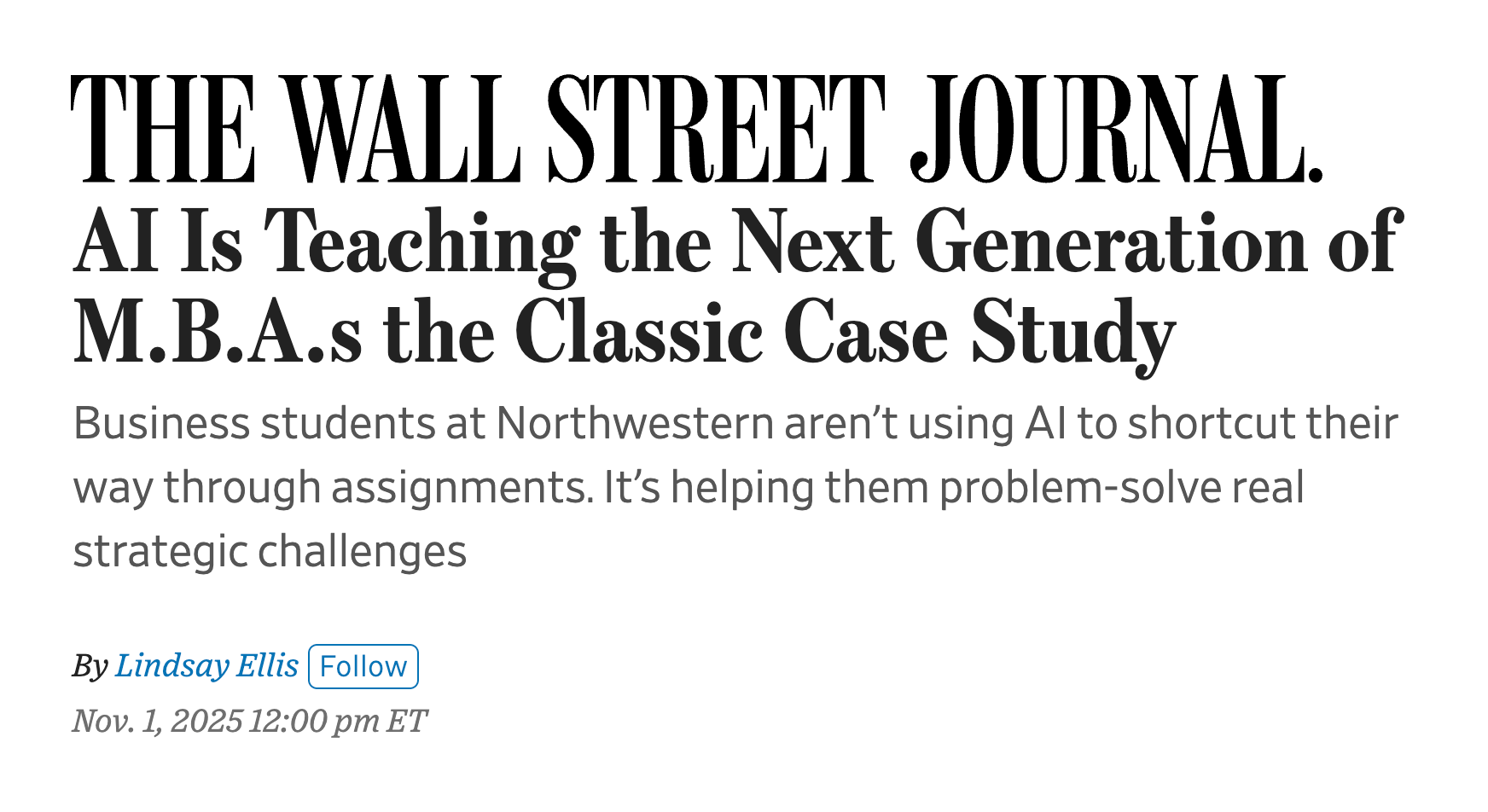
AI cases you can talk to
▶ Quick demo
A case where students interview the characters
Students ask the characters for the information they need.
The characters answer like people: they push back, and they do not volunteer the solution.
No shortcut: to solve the case, you have to ask the right questions.

Article + live demo
wsj.com/tech/ai/…the-classic-case-study
Characters students talk to
Her own AI case for the operations core

Pnina Feldman
UVA Darden
What she did
She wrote an AI case for her course: students interview characters to solve a problem that draws on the whole course.
One thing she learned
She could write it herself, with AI. No developer, no publisher.
Characters students talk to
Quizzes turned into mock job interviews

Zonghao Yang
Stevens
What he did
Instead of a multiple-choice quiz, an AI interviewer asks each student ten questions on the course, then gives personal feedback.
One thing he learned
Students only use a course AI if it offers something ChatGPT does not.
Characters students talk to
A consulting exercise with three AI characters

Christian Blanco
Ohio State
What he did
Students play consultants at an airport. Three AI characters each hold part of the data, and students must interview all three.
One thing he learned
Students want to use AI in class the way they will use it at work.
What this group has built
Four ways AI is entering our classrooms
1
A tutor in every course
An assistant that knows your material, there at any hour.
2
Characters students talk to
Interviews, cases, and simulations played by AI personas.
3
Students supervising AI
Students direct the AI, and must check its work.
4
Instructors who build
AI builds the app, the case, the exercise. You design it.
Students supervising AI
Students manage the AI like an intern

Wenchang Zhang
Indiana Kelley
What he did
In his data competition, students plan the analysis, give the AI one step at a time, and check what comes back.
One thing he learned
Results improved a lot: ten teams beat the course record. But some students felt they learned less.
Students supervising AI
Students specify and check, AI writes the code

Rob Bray
Northwestern Kellogg
together with Robbie Sanders
What they did
Students split a data analysis into small steps, describe each step in plain English, let the AI write the code, then design a test for each step.
One thing they learned
Students like having a real role: deciding what to do, and proving it is correct.
Students supervising AI
MBAs build their own AI tools

Ben Collier
Carnegie Mellon Tepper
What he did
In a seven-week course, MBA students program AI agents that analyze text and images, then build a project of their own.
One thing he learned
The hard part is now grading: how do you evaluate code that AI wrote?
Students supervising AI
A data course rebuilt around AI

Jun Li
Michigan Ross
What she did
She stopped teaching coding in class. AI writes the code, and class time goes to real business problems.
One thing she learned
Students cannot judge code they never learned to write.
What this group has built
Four ways AI is entering our classrooms
1
A tutor in every course
An assistant that knows your material, there at any hour.
2
Characters students talk to
Interviews, cases, and simulations played by AI personas.
3
Students supervising AI
Students direct the AI, and must check its work.
4
Instructors who build
AI builds the app, the case, the exercise. You design it.
Instructors who build
A small interactive app for each chapter

Blair Flicker
South Carolina
What he did
He asks AI to build simple web apps where students play with a concept and see every calculation. Each takes about 20 minutes.
One thing he learned
He can add AI-built material without changing any assignment or exam.
Instructors who build
My experience with AI in education
Four years in, the one thing that predicts success: how involved the instructor is.
It has never been
easier to build
My main advice: ask more of the AI than you think you should.
▶ Live demo
Your turn
What do you want to try with AI in your teaching?
1
A tutor in every course
An assistant that knows your material, there at any hour.
2
Characters students talk to
Interviews, cases, and simulations played by AI personas.
3
Students supervising AI
Students direct the AI, and must check its work.
4
Instructors who build
AI builds the app, the case, the exercise. You design it.
Question 1. In the chat: one idea you have tried, or would like to try.
Your turn
What should be the future of this group?
We have
Great processes
Approvals across schools, a shared platform, a data pipeline, a yearly workshop.
We have
A great community
Instructors at many schools who try new things in their own classrooms.
What should we apply them to?
What is the next paper?
Question 2. Share your ideas in the chat.
Thank you

sebastienmartin.info
WSJ & live demo

AI class syllabus